Travel opens the door to new cultures, unforgettable experiences, and meaningful connections. Every year, millions of travelers visit global destinations such as Paris, Bangkok, Istanbul, Rome, and Barcelona.
While most trips are safe and enjoyable, tourists can sometimes be targeted by opportunistic scams. These situations are rarely dangerous, but they can cause stress, financial loss, and unnecessary inconvenience.
The good news is simple: most travel scams follow familiar patterns. When you know what to look for, you can avoid them confidently.
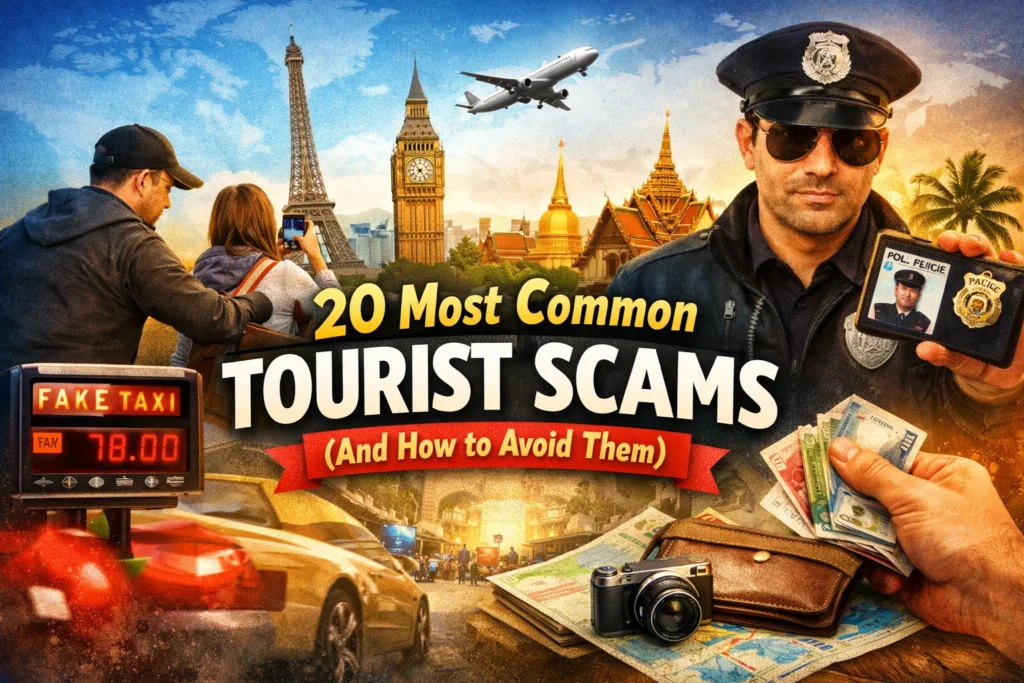
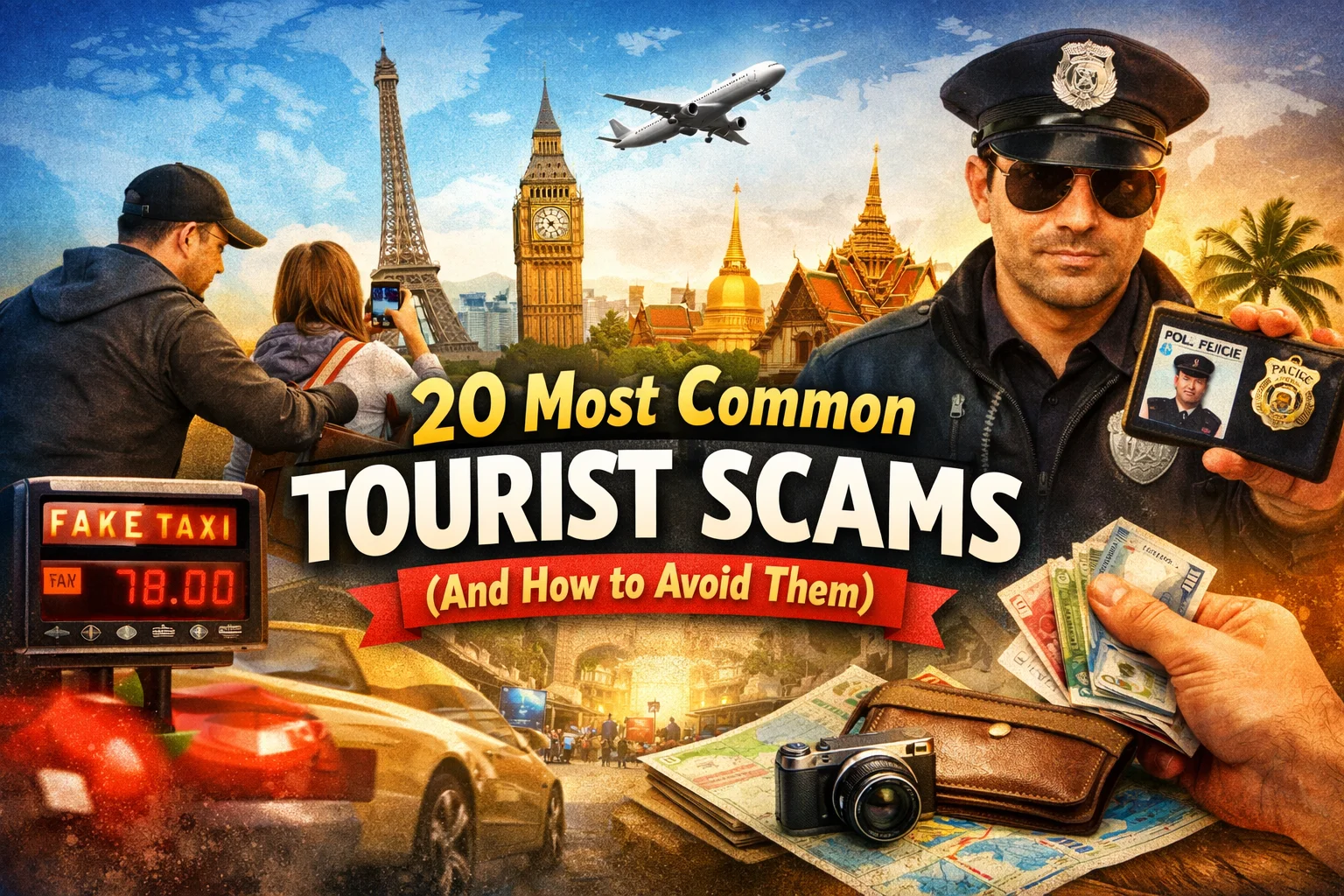
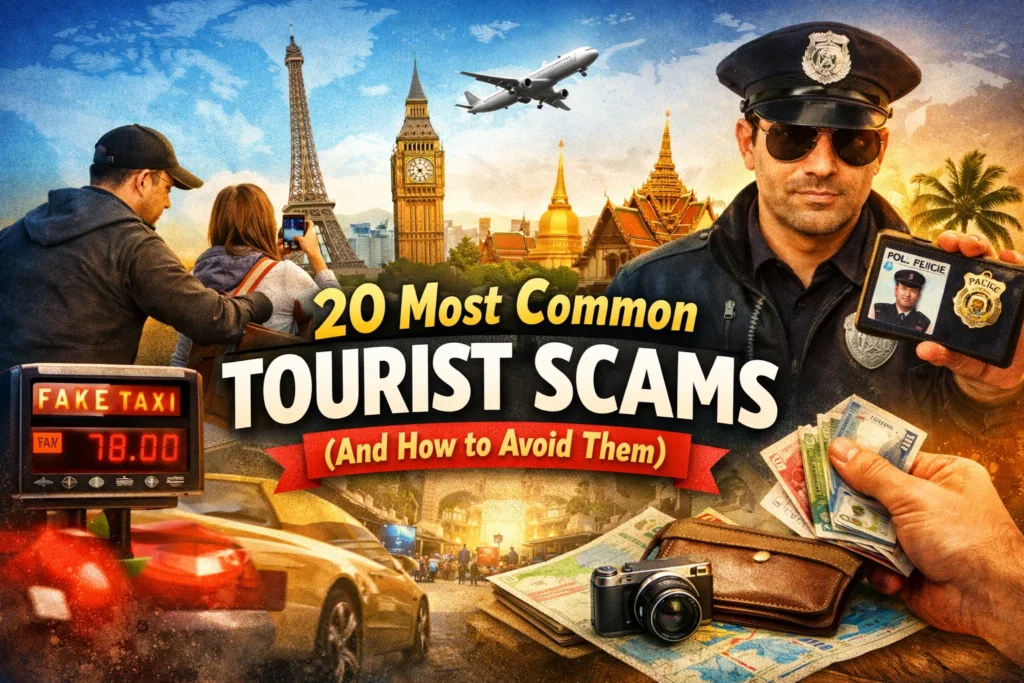
Below are 20 of the most common tourist scams worldwide — and practical steps to protect yourself.
1. Taxi Overcharge Scam
How it works: The driver refuses to use the meter or claims it is broken, then charges an inflated fare.
How to avoid it:
- Use official taxi stands or reputable ride-hailing apps.
- Ensure the meter is running before departure.
- Research average fares in advance.
2. Fake Police Officers
How it works: Someone posing as a police officer asks to inspect your wallet for counterfeit currency and discreetly removes cash.
How to avoid it:
- Request official identification.
- Do not hand over your wallet.
- Suggest going to the nearest police station.

3. Distraction Pickpocketing
How it works: One person distracts you (asking for directions, spilling something), while another steals your belongings.
How to avoid it:
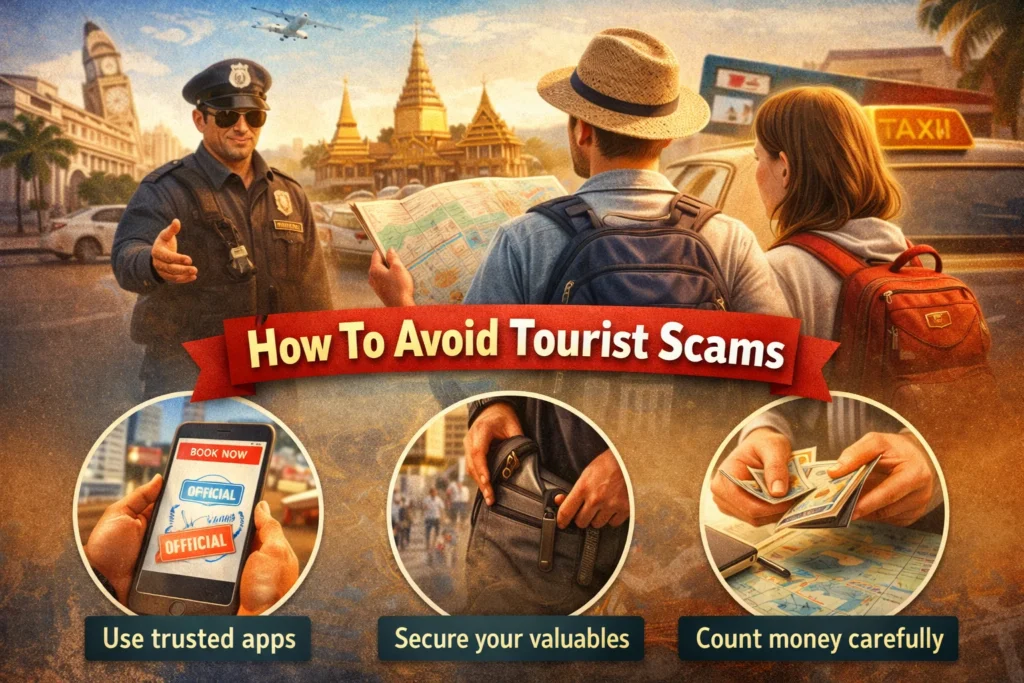
- Use anti-theft bags.
- Keep valuables in front-facing compartments.
- Stay alert in crowded areas.
4. “Attraction Is Closed” Trick
How it works: A stranger informs you that a popular attraction is closed and redirects you to a shop or alternative location.
How to avoid it:
- Verify closures through official sources.
- Avoid changing plans based on unsolicited advice.
- Politely decline assistance from strangers.
5. Fake Tour Guides
How it works: Unlicensed individuals offer discounted tours, collect payment, and provide poor service — or disappear.
How to avoid it:
- Book tours through verified platforms.
- Check online reviews.
- Confirm credentials where required.
6. “Free” Gift or Bracelet
How it works: Someone places a bracelet or small item in your hand and demands payment afterward.
How to avoid it:
- Keep your hands to yourself.
- Firmly say “No, thank you.”
- Continue walking without engaging.
7. ATM Assistance Scam
How it works: A stranger offers help at an ATM and observes your PIN or swaps your card.
How to avoid it:
- Decline assistance from strangers.
- Shield the keypad while entering your PIN.
- Use ATMs inside banks when possible.
8. Currency Switching
How it works: A vendor quickly swaps your banknote with a smaller one and claims you paid less.
How to avoid it:
- Count your money carefully.
- State the amount clearly while paying.
- Use smaller bills when possible.
9. Fake Hotel Booking Websites
How it works: Fraudulent websites imitate real hotels and collect payments without confirming reservations.
How to avoid it:
- Book through reputable platforms.
- Double-check URLs carefully.
- Contact the hotel directly if uncertain.
10. Unofficial Airport Transfers
How it works: Individuals approach travelers inside airports offering private rides at inflated prices.
How to avoid it:
- Use official airport taxi counters.
- Pre-book transfers when possible.
- Avoid unsolicited offers.
11. Rental Car Damage Claims
How it works: Rental companies claim you caused pre-existing damage and charge additional fees.
How to avoid it:
- Photograph the vehicle before departure.
- Ensure all existing damage is documented.
- Review your contract carefully.
12. Fake Public Wi-Fi Networks
How it works: Scammers create public Wi-Fi networks to intercept sensitive information.
How to avoid it:
- Avoid accessing banking apps on public Wi-Fi.
- Use secure networks whenever possible.
- Consider using a trusted VPN service.
13. Romance or Emergency Money Requests
How it works: Someone builds an online relationship and later asks for financial help related to travel emergencies.
How to avoid it:
- Be cautious with online relationships.
- Never send money to someone you haven’t met safely.
- Watch for emotional pressure tactics.
14. Fake Charity Collectors
How it works: Individuals request donations for charities that may not exist.
How to avoid it:
- Donate through official websites only.
- Research organizations before contributing.
- Politely decline street solicitations.
15. Restaurant Menu Manipulation
How it works: Tourists receive menus without prices or are charged different prices than listed.
How to avoid it:
- Ask for a menu with prices clearly displayed.
- Confirm pricing before ordering.
- Check reviews before choosing restaurants.
16. “Broken” Taxi Meter
How it works: The driver claims the meter is not functioning and proposes a higher flat rate.
How to avoid it:
- Exit the vehicle if possible before the trip begins.
- Agree on a fair rate beforehand if necessary.
17. Inflated Souvenir Pricing
How it works: Vendors significantly increase prices for tourists.
How to avoid it:
- Compare prices at multiple shops.
- Research average costs beforehand.
- Politely negotiate where culturally appropriate.
18. Photo Assistance Theft
How it works: A stranger offers to take your photo and runs away with your device.
How to avoid it:
- Ask fellow travelers instead.
- Keep camera straps secured.
- Avoid handing devices to unverified individuals.
19. High-Pressure Timeshare Presentations
How it works: Travelers are offered free gifts in exchange for attending a presentation that involves aggressive sales tactics.
How to avoid it:
- Be cautious of offers that seem unusually generous.
- Avoid sharing financial details.
- Leave immediately if uncomfortable.
20. “Spilled Drink” Distraction
How it works: Someone spills something on you and pretends to help while an accomplice steals your belongings.
How to avoid it:
- Secure your valuables immediately.
- Decline unnecessary assistance.
- Move to a well-lit, populated area.
Final Thoughts: Awareness Builds Confidence
Travel should be enriching, not stressful. While scams exist in many parts of the world, they represent a small portion of overall travel experiences.
Preparation is your strongest safeguard. By researching your destination, staying attentive in crowded areas, and trusting your instincts, you significantly reduce your risk.
Most importantly, remember that the vast majority of people you meet while traveling are honest and welcoming.
Travel smart. Stay aware. And explore the world with confidence.